
The best vinyl wrap for your car depends on more than color or price. Before selecting a wrap, consider the vehicle’s body shape, paint condition, desired finish, material characteristics, driving environment, coverage, and installation requirements. Matching the material to the vehicle and intended use helps support a cleaner fit, consistent appearance, and better long-term value.
Why Does Your Car’s Make and Model Matter When Choosing a Vinyl Wrap?
Every vehicle has different body lines, contours, panel sizes, trim pieces, and surface conditions. A wrap that works well on a sedan may present different installation challenges on a sports car with deep curves, a truck with large panels, or a vehicle with aftermarket modifications.
The vehicle’s condition matters, too. Vinyl wrap requires a suitable surface for proper adhesion. Peeling paint, severe oxidation, loose trim, serious damage, or unstable surfaces may need attention before installation.
Your car’s design can also influence the best finish. Strong body lines may look different with gloss than with matte or satin film. Complex contours may require careful material selection and experienced installation techniques.
What Should You Consider Before Choosing a Vinyl Wrap?
Before choosing a material, evaluate the vehicle and your goals rather than selecting a color first.
- Vehicle shape: Complex curves, recessed areas, and sharp contours may require highly conformable material.
- Paint condition: The underlying finish should be stable and suitable for wrapping.
- Desired finish: Gloss, matte, satin, textured, and specialty finishes create different visual effects.
- Driving environment: Sun exposure, weather, road conditions, and parking habits can affect maintenance.
- Coverage: Full and partial wraps serve different styling and budget objectives.
- Installation requirements: The material should be appropriate for the vehicle and intended application.
- Maintenance: Different finishes may require different cleaning and care practices.
Considering these factors before purchasing film can help prevent choosing a product based solely on appearance.
How Do Gloss, Matte, and Satin Vinyl Wraps Compare?
The finish is one of the most visible decisions when selecting a wrap. However, appearance should be considered alongside maintenance and the vehicle’s existing design.
| Finish | Appearance | Considerations | Best For |
| Gloss | Paint-like shine | Highlights body lines and provides a reflective appearance | Classic or sporty styling |
| Matte | Low-reflection appearance | Requires appropriate cleaning and care | Understated or distinctive styling |
| Satin | Soft sheen between gloss and matte | Provides a balanced appearance | Owners wanting subtle contrast |
| Textured | Added visual or tactile effect | Care depends on the specific material | Custom styling |
There is no universally best finish. The right choice depends on the vehicle, design goals, maintenance expectations, and personal preference.
How Does Vinyl Material Affect Fit and Durability?
Material characteristics influence how vinyl behaves during installation and everyday use. Flexibility and conformability are especially important when a vehicle has complex curves, recessed areas, or difficult edges.
A material that conforms appropriately can help an installer achieve a cleaner application. However, flexibility should not be evaluated alone. Adhesive characteristics, manufacturer specifications, surface preparation, installation technique, and the intended application also matter.
Vehicle owners should review technical information from the manufacturer rather than assuming that thicker film automatically provides better performance. Choosing vinyl involves balancing conformability, finish, durability, and application requirements.
How Do You Match a Wrap to Your Car’s Design?
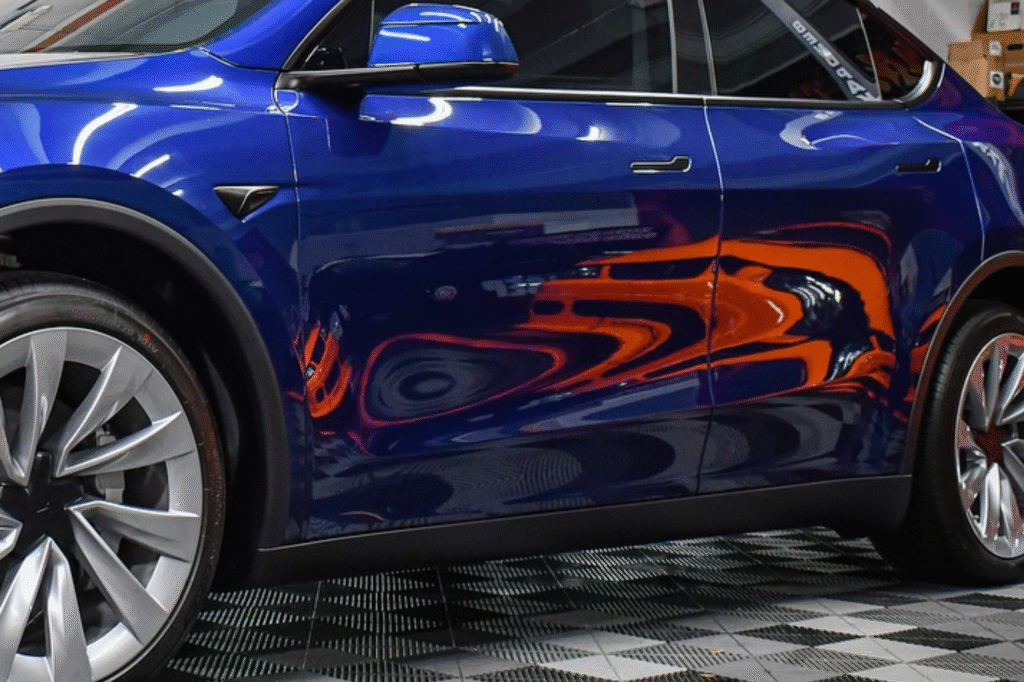
The vehicle’s existing shape should influence the finish and color decision. Gloss can emphasize curves and create a paint-like appearance, while matte and satin finishes can provide a more subdued visual effect.
Color can also change how body contours are perceived. Darker colors may create a different visual impression from brighter, metallic, or specialty finishes. Textured materials can add another layer of visual interest but may require specific maintenance procedures.
The goal is not necessarily to select the most unusual wrap. It is to choose a material and finish that complement the vehicle’s proportions, design, and intended appearance.
Why Is Surface Preparation Important Before a Vinyl Wrap?
Surface preparation is one of the most important parts of a professional wrap installation. Dirt, wax, grease, adhesive residue, and other contaminants can interfere with adhesion and create visible imperfections beneath the film.
Tint Haus Customs states that its process for vinyl wrap in Miami, FL includes removing dirt, debris, and wax residue before application. The company also describes a final inspection designed to identify bubbles, wrinkles, or other imperfections and complete necessary touch-ups.
A clean, stable surface gives vinyl a better foundation. However, surface preparation cannot correct underlying paint failure. If the existing finish is peeling, cracked, or unstable, the vehicle should be evaluated before wrapping.
What Is the Difference Between a Full and Partial Vinyl Wrap?
A full wrap covers substantially more of the vehicle and provides a more complete change in appearance. A partial wrap covers selected panels or areas and can be useful when the goal is targeted customization.
| Coverage | Advantages | Considerations |
| Full wrap | Creates a major appearance transformation | Requires more material and labor |
| Partial wrap | Allows targeted customization | Existing paint remains visible on uncovered areas |
The best option depends on the design objective, budget, vehicle condition, and desired level of customization.
How Does Professional Installation Affect the Final Result?
In Miami, vinyl wrap installation requires careful surface preparation, accurate positioning, controlled application, edge finishing, and inspection. Complex panels can make small installation errors more noticeable.
Professional installation can help reduce common problems such as wrinkles, bubbles, lifting, contamination, and poor alignment. Tint Haus Customs describes a process that includes design and customization, surface preparation, application using specialized tools and techniques, finishing inspection, and touch-ups when needed.
For automotive enthusiasts and luxury car owners, installation quality matters because the wrap becomes a highly visible part of the vehicle. A carefully selected material still requires proper preparation and application to achieve the intended result.
Myth: Thicker Vinyl Is Always Better
A common misconception is that the thickest vinyl is automatically the best choice. Thickness alone does not determine whether a material is suitable for a particular vehicle.
Conformability, adhesive characteristics, finish, manufacturer specifications, installation technique, and intended use all influence product suitability.
A material that is difficult to conform around complex contours may not produce the desired result simply because it is thicker. The better approach is to select a product designed for the application and have it installed according to the manufacturer’s requirements.
How Much Does a Vinyl Wrap Cost?
Vinyl wrap pricing varies according to several factors rather than one universal rate.
Main factors that influence cost
- Vehicle size and body style
- Full or partial coverage
- Vinyl type and finish
- Design complexity
- Surface condition
- Number of panels
- Required preparation
- Installation difficulty
- Additional customization
A complex vehicle can require more labor than a vehicle with relatively simple body panels. Specialty finishes and custom graphics may also affect the final price.
Instead of comparing prices based only on the advertised starting rate, ask what material, coverage, preparation, installation, and warranty are included in the quote for vinyl wrap in Miami. A detailed estimate makes it easier to compare providers fairly and understand the value, workmanship, and protection included with the completed wrap.
What Should You Ask Before Choosing a Vinyl Wrap?
Before committing to a wrap, ask questions that help establish whether the material and installation approach are appropriate for your vehicle.
Which material is recommended for my vehicle? Ask why the selected film is suitable for the car’s shape and intended use.
Which finish best matches my goals? Discuss gloss, matte, satin, textured, and specialty options.
Does my paint need preparation? Existing damage or unstable paint may affect installation.
What coverage is included? Confirm whether the quote covers the entire vehicle or selected panels.
What maintenance is required? Ask about washing, cleaning products, and long-term care.
What warranty applies? Confirm the manufacturer’s and installer’s coverage and conditions.
Choose Vinyl Based on Your Vehicle and Goals
Choosing the best vinyl wrap starts with understanding your vehicle rather than selecting a color first. Evaluate the make and model, body contours, paint condition, desired finish, material characteristics, coverage, maintenance requirements, and installation process.
Professional installation can help turn the selected material into a clean, consistent finish, while proper maintenance helps preserve the result. Tint Haus Customs provides vinyl wrap services with a process that includes customization, surface preparation, application, inspection, and finishing.
Tint Haus Customs is committed to automotive protection and preserving your investment while helping automotive enthusiasts and luxury car owners achieve their desired appearance.
Contact Us to discuss your vehicle, design goals, coverage options, and vinyl wrap requirements.
People Also Ask
What is the best vinyl wrap for a car?
The best vinyl wrap depends on the vehicle’s shape, paint condition, desired finish, driving environment, and installation requirements. There is no single material that is ideal for every vehicle.
How long does a vinyl wrap last?
Service life varies according to the material, exposure, maintenance, installation quality, and manufacturer specifications. Follow the product’s care and warranty guidance.
Does vinyl wrap damage car paint?
Properly installed vinyl can cover and help shield the underlying finish from some environmental exposure. However, unstable or damaged paint can create adhesion and removal concerns.
Can you wrap a car with damaged paint?
It depends on the condition. Peeling, failing, or severely damaged paint may prevent proper adhesion or create removal concerns. The surface should be evaluated before installation.
Is vinyl wrap better than painting a car?
Neither is universally better. Vinyl offers changeable styling and can cover an existing finish, while paint provides a permanent refinishing option. The right choice depends on the project’s goals.