
To avoid common window tint mistakes and extend your tint’s longevity, prioritize proper installation, curing time, and aftercare. Professional preparation helps prevent bubbling, peeling, haze, and poor adhesion caused by contamination, unsuitable conditions, or premature window use. Following professional installation procedures and film manufacturer instructions allows the tint to cure properly and maintain a cleaner, more durable finish over time.
Why Does Timing Matter for Window Tint Longevity?
Window tint uses an adhesive system that needs time to establish a secure bond with the glass. During installation and the initial curing period, temperature, humidity, moisture, surface cleanliness, and film handling can influence the finished result.
Newly installed tint may not look completely finished immediately. Small amounts of moisture can remain beneath the film while the adhesive stabilizes, which can temporarily cause haze or small water pockets. These conditions should be monitored according to the installer’s recommended curing instructions.
Persistent bubbling, peeling, significant discoloration, or edge lifting should not automatically be considered normal curing. If a problem remains after the expected curing period, the installation should be inspected to determine the cause.
What Are the Most Common Window Tint Mistakes?
Most avoidable tint problems involve preparation, application, product selection, or aftercare.
1. Installing Without Proper Environmental Control
Temperature and humidity can affect application materials and adhesive behavior. A suitable installation environment helps the installer manage these variables.
2. Failing to Prepare the Glass Properly
Dust, oil, residue, old adhesive, and other contaminants can interfere with contact between film and glass. Thorough surface preparation is essential for consistent adhesion and optical clarity.
3. Choosing Film Based Only on Price
The least expensive film is not automatically the best value. Films differ in construction, VLT, solar-control performance, warranty coverage, and other specifications. Compare documented characteristics and choose according to your vehicle and goals.
4. Rolling Windows Down Too Soon
Operating a window before the film has sufficiently cured can disturb the material around the edges and seals. Follow the specific waiting period provided by the installer and manufacturer.
How to Tint Car Windows: What Beginners Should Know
Learning how to tint car windows involves preparing the glass, measuring and cutting film, shaping it when necessary, positioning it accurately, removing application moisture, finishing the edges, and allowing the adhesive to cure.
For beginners researching window tinting in South Florida, preparation is critical. Dust or residue can remain visible beneath the film, while inaccurate cutting can create uneven edges.
A basic process includes:
- Prepare the glass and remove contaminants.
- Measure and cut the film accurately.
- Shape film for curved glass when required.
- Apply and position the film.
- Remove moisture with appropriate tools.
- Finish the edges and allow proper curing.
Film and basic tools do not eliminate the need for proper technique.
How to Tint Truck Windows Without Common Problems
The fundamentals of how to tint truck windows are similar to passenger vehicles, but larger panels, curved glass, seals, and increased surface area can make accurate application more demanding.
Truck owners should pay particular attention to:
- Thorough glass preparation
- Accurate measurement and cutting
- Proper positioning around seals
- Careful edge finishing
- Adequate curing time
Large panels can make alignment errors more noticeable, while curved glass may require shaping techniques that are difficult to perform consistently without experience.
What Is Included in a Window Tint Installation Kit?
A window tint installation kit typically contains basic tools such as squeegees, trimming tools, spray bottles, or blades. However, having the tools does not guarantee a professional result.
Dust, poor glass preparation, incorrect positioning, uneven pressure, improper trimming, difficult curved glass, and insufficient curing can still affect the finished installation. A kit supports the process but cannot replace experience or preparation.
Professional Installation vs. DIY Window Tinting
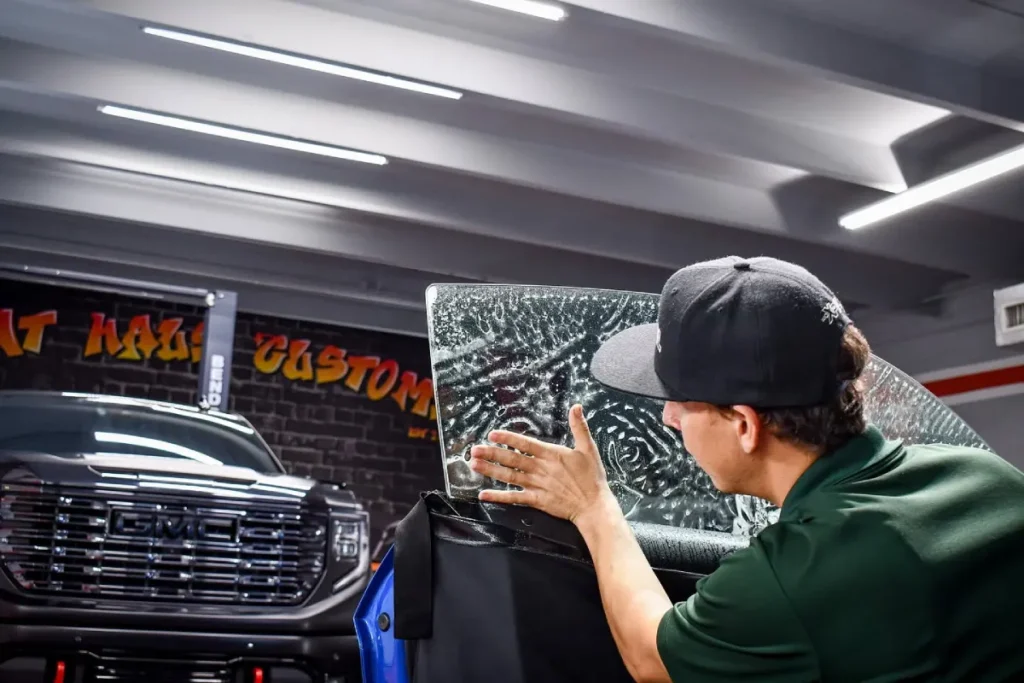
DIY installation can reduce the initial cost, but the result depends heavily on execution. Professional window tinting services in South Florida combine product knowledge, proper surface preparation, precise application techniques, and aftercare guidance to help achieve a clean, durable finish.
| Factor | DIY Installation | Professional Installation |
| Glass preparation | Depends on the owner | Completed as part of installation |
| Environmental control | Often limited | Conditions can be managed |
| Film shaping | Requires practice | Established techniques are used |
| Edge finishing | Greater risk of errors | Completed during installation |
| Troubleshooting | Owner handles issues | Installer can evaluate problems |
| Aftercare | Owner researches instructions | Installer provides guidance |
Professional installation cannot eliminate every potential film issue, but it can reduce preventable mistakes involving contamination, alignment, shaping, and premature handling.
How Can You Help Window Tint Last Longer?
Tint longevity is influenced by four major stages: product selection, installation, curing, and maintenance.
Before Installation: Consider your desired appearance, driving conditions, heat-control goals, and applicable tint regulations. Ask about film specifications and warranty coverage.
During Installation: The glass should be properly prepared, the film accurately positioned, and application completed using techniques appropriate for the vehicle and product.
During Curing: Avoid disturbing the film and follow the installer’s instructions regarding window operation and cleaning.
After Curing: Use appropriate cleaning products and non-abrasive materials. If bubbling, peeling, discoloration, or other unusual changes develop after the recommended curing period, have the installation evaluated.
A vehicle owner in Pine Island Ridge may prioritize comfort, while another in Forest Ridge may focus on appearance. A separate owner in Shenandoah may compare heat-control specifications.
What Window Tint Specifications Should You Understand?
Visible Light Transmission (VLT): The percentage of visible light that passes through the film and glass.
UV Rejection: A measurement describing how much ultraviolet radiation the film blocks according to the manufacturer’s testing method.
Heat Rejection: A measurement describing the film’s ability to reduce solar heat entering the vehicle.
Infrared Rejection: A measurement describing how much infrared energy a film rejects under a specified testing method.
Curing Time: The period needed for the adhesive and film system to stabilize.
Adhesion: The ability of the adhesive system to maintain contact between film and glass.
Myth: Darker Tint Automatically Means Better Heat Rejection
A darker-looking window film does not automatically provide the highest heat rejection. Tint darkness and solar-control performance are different characteristics.
VLT describes visible light transmission, while heat-control performance depends on film construction and documented specifications. Comparing manufacturer specifications provides a better basis for evaluating performance than judging darkness alone.
Why Can Cheap Window Tint Become More Expensive Over Time?
Low-cost tinting may appear attractive, but total value depends on film quality, installation technique, warranty coverage, and expected service life. Someone searching for window tinting Calgary prices may find different rates because film type, vehicle size, installation complexity, warranty, and included services affect pricing. Compare what each installation includes rather than choosing the lowest number.
What Should You Do If Window Tint Starts Bubbling or Peeling?
First, determine whether the film is still within its expected curing period. Temporary haze or small moisture-related changes can occur after installation, but persistent defects deserve attention.
If you notice a problem:
- Do not puncture bubbles.
- Do not pull at peeling edges. This can worsen the condition.
- Check the recommended curing period and follow installation instructions.
- Document persistent defects with photos.
- Contact the installer for professional evaluation.
Why Does Professional Window Tint Installation Matter?
Professional installation is about more than appearance. Properly selected and installed film can contribute to comfort, glare management, UV protection, privacy, and interior preservation.
Tint Haus Customs offers automotive window tint in South Florida and other vehicle protection services and describes its team as certified professionals. Its service emphasizes film options, professional installation, UV protection, heat reduction, privacy, and interior protection.
For automotive enthusiasts and luxury car owners, the installation process matters because preserving a vehicle investment involves both product selection and workmanship. A quality installation begins with an appropriate film and continues through careful application, proper curing, and recommended maintenance.
Protect Your Tint With Proper Installation and Timing
Window tint longevity depends on more than choosing a dark or expensive film. Proper glass preparation, suitable installation conditions, accurate application, adequate curing, and correct aftercare all contribute to a cleaner and more durable result.
Do not rush the process. Give the adhesive time to cure, follow the installer’s instructions, and have persistent problems professionally evaluated.
Tint Haus Customs is focused on automotive protection and helping vehicle owners preserve their investment through professional vehicle services.
If you are considering new window tint or need help evaluating an existing installation, contact us to discuss your vehicle, performance goals, and available options.
People Also Ask
Why does window tint bubble after installation?
Temporary moisture can create haze or small bubbles during curing. Persistent bubbling should be inspected.
How long does window tint take to cure?
Curing time varies by film and conditions. Follow the installer’s and manufacturer’s instructions.
Can I roll my windows down after getting tint?
Wait until the installer confirms that the film has sufficiently cured.
Why does window tint peel at the edges?
Edge peeling can result from poor preparation, adhesion problems, premature window movement, damage, or other factors.