
When a vehicle is repainted, existing paint protection film typically needs to be removed from the refinished panels and replaced after the new paint has fully cured. Installing film too soon can interfere with curing, while removing or applying PPF over improperly prepared refinished paint can increase the risk of paint lifting or adhesion problems.
What Happens to Existing PPF Before Repainting
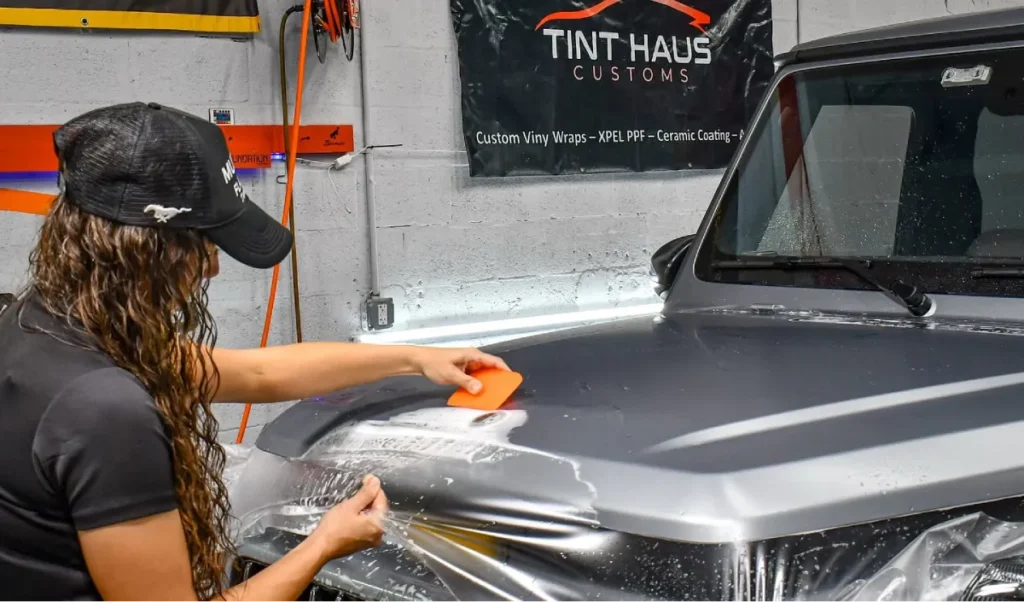
PPF is a transparent urethane layer adhered over a vehicle’s painted surface. Tint Haus Customs uses XPEL Paint Protection Film and trained installation techniques to protect vehicles from road debris and other everyday hazards.
If a protected panel needs repainting, the normal process follows this order:
- Remove the existing film. PPF covering the affected panel must come off so the body shop can access and refinish the paint.
- Repair and prepare the surface. Damage is corrected, and the panel is prepared according to the refinishing system being used.
- Apply the new paint and clear coat. The body shop restores the panel’s finish.
- Allow the refinished surface to cure. The appropriate waiting period depends on the paint system and the body shop’s recommendations.
- Inspect the finish. The surface should be checked for defects, contamination, or other conditions that could affect film installation.
- Install new PPF. Once the refinished surface is ready, new film can be applied.
Drivers researching paint protection film in Aventura, FL should tell their installer whenever a panel has been repainted. Refinished paint can behave differently from an intact factory finish, making surface assessment particularly important before installation.
Can PPF Be Reused After It Is Removed
No. PPF should generally be considered a one-time installation rather than a reusable covering.
Once removed, the film may stretch or distort, and its adhesive layer will no longer provide the controlled bond expected from a fresh installation. Reapplying the old piece can therefore compromise fit, appearance, and protection.
Key PPF Terms to Know
Adhesive layer:
The film layer designed to bond PPF securely to a properly prepared painted surface.
Clear coat:
The transparent upper layer of an automotive paint system that provides gloss and helps protect the underlying color coat.
Factory paint:
The original finish applied under the vehicle manufacturer’s controlled production process.
Refinished paint:
Paint applied after the original factory finish, typically following collision repair, cosmetic repair, or restoration.
Cure time:
The period required for a refinishing system to reach the condition specified by the paint manufacturer or body shop before additional products are applied.
How Long Should You Wait Before Installing PPF on New Paint
There is no universal waiting period for every repaint.
Paint systems, hardeners, application conditions, drying methods, repair procedures, and manufacturer specifications can differ. For that reason, the body shop that performed the repaint should determine when the finish is sufficiently cured for an adhesive film.
A practical process is:
- Ask the body shop what paint system was used.
- Request its recommended cure time before applying PPF.
- Tell the PPF installer that the panel has been refinished.
- Have the surface inspected before installation.
- Proceed only after the finish is considered ready.
Someone comparing paint protection film in Aventura options should therefore avoid choosing an installation date solely from a generic online recommendation. The actual condition of the refinished surface matters more than an arbitrary number of days.
Why Proper Curing Matters
Fresh automotive paint can continue to undergo chemical and physical changes even after it initially feels dry. “Dry” and “fully ready for film installation” are not necessarily the same thing.
Applying adhesive film before the refinishing system is ready may create avoidable risks. Waiting for the body shop’s specified curing period helps establish a more stable surface for installation.
Factory Paint vs. Repainted Paint: What Changes for PPF?
| Factor | Factory Paint | Repainted Paint |
| Application | Controlled during manufacturing | Applied during repair or refinishing |
| Surface history | Usually known | May vary by previous repair |
| PPF preparation | Standard inspection and prep | Requires closer review of refinished surface |
| Removal considerations | Generally predictable on sound OEM paint | Greater caution may be appropriate |
| Installation timing | No repaint curing period | Depends on paint-system cure requirements |
This distinction matters because PPF adheres to the vehicle’s upper painted surface. If that surface has weak adhesion between paint layers, removing the film may expose an existing paint problem.
For automotive enthusiasts and luxury car owners around Williams Island, keeping documentation from a body shop can be useful. Knowing what was repaired, which panels were refinished, and when the work was completed gives the film installer better information before evaluating the vehicle.
What Should Be Checked Before PPF Goes Over Repainted Panels
A professional inspection should focus on the surface’s quality and readiness rather than simply on whether the paint looks glossy.
Important checks include:
- Proper curing according to the refinishing provider
- Clean, smooth paint without loose material
- Consistent clear-coat finish
- Absence of significant surface contamination
- Corrected paint defects that could remain visible beneath transparent film
- Clear identification of previously repaired panels
Tint Haus Customs states that its PPF process includes cleaning, polishing, and surface preparation before installation, and that its technicians are XPEL-trained professionals.
For drivers searching Aventura FL paint protection film, communicating a vehicle’s repair history is therefore an important part of the installation process rather than an unnecessary detail.
Common Myth: PPF Can Simply Stay on During a Repaint
One common misconception is that a body shop can repaint a protected panel while leaving its PPF intact.
That is not how a proper panel repaint works. Film covering the repair area blocks access to the underlying finish and must be removed before normal preparation and refinishing can take place.
Another misconception is that PPF itself causes properly bonded paint to fail. The more important distinction is the condition of the underlying finish. Removal from sound factory paint is different from removal over a panel with poorly bonded or inadequately prepared refinishing work.
That is why experienced installers want to know a vehicle’s paint history before working on it.
How Can You Protect a Repainted Vehicle Going Forward
Once the new finish has cured and passed inspection, replacing the removed PPF restores a sacrificial layer over vulnerable painted areas.
PPF is particularly useful on surfaces exposed to:
- Stone and road-debris impacts
- Bug residue
- Minor surface abrasions
- Environmental contamination
- Wear associated with regular driving
Tint Haus Customs offers several PPF coverage options, including protection for frequently exposed areas, full-vehicle coverage, satin-finish film, and colored film. The company identifies itself as an XPEL Authorized Dealer with trained installers.
Vehicle owners comparing Aventura paint protection film after collision or cosmetic repairs should think beyond simply replacing the piece that was removed. It can also be a useful time to review whether the existing coverage still matches how the vehicle is driven.
Protect Refinished Paint With the Right Installation
Repainting a vehicle does not prevent it from being protected with PPF again. The important steps are removing the old film, correctly completing the repair, allowing the new finish to cure, inspecting the surface, and installing fresh film under suitable conditions.
Tint Haus Customs provides XPEL PPF installation and serves vehicle owners throughout South Florida, including Aventura. For owners committed to preserving their investment, especially automotive enthusiasts and luxury car owners, careful preparation can help protect a refinished vehicle without rushing the process.
Contact us today to discuss your vehicle’s paint history, prior repairs, and PPF coverage needs. The team can evaluate the vehicle and help determine the appropriate next step for protecting its finish.
People Also Ask
Can PPF be installed over repainted car panels?
Yes, PPF can generally be installed over properly refinished automotive paint once the paint system has cured sufficiently and the surface is suitable for film application. Always follow the body shop or paint manufacturer’s curing recommendation.
Will removing PPF pull off repainted paint?
It can happen if the refinished paint has inadequate adhesion or other underlying problems. Repainted panels should therefore be identified before PPF removal so the installer can assess the situation and use appropriate removal techniques.
Do I need new PPF after collision repair?
If a PPF-covered panel is repaired and repainted, replacement film will normally be needed because the existing piece must be removed for refinishing and should not be reused afterward.
Can PPF be installed immediately after a repaint?
It should not be installed until the refinishing system is ready for an adhesive film. Because cure requirements vary, obtain the appropriate timeline from the body shop rather than relying on a universal waiting period.