
Ceramic coating improves gloss, paint clarity, and surface smoothness far more effectively than traditional car wax because it forms a permanent or semi-permanent covalent chemical bond with a vehicle’s factory clear coat, whereas wax merely sits on top as a temporary sacrificial layer. By filling in microscopic pores and curing into a rigid, optically transparent silica-based shell, it refracts light uniformly and creates an ultra-slick hydrophobic surface that resists degradation from UV rays, heat, and environmental contaminants for years rather than weeks.
The Science Behind Paint Reflection: Chemical Bonding vs. Surface Layering
Factory clear coat looks smooth to the naked eye, yet under magnification it consists of microscopic peaks, valleys, and pores that scatter incoming light and mute color depth.
Traditional carnauba wax and polymer sealants rely on physical adhesion. Buffing wax onto a panel fills some of those surface valleys with soft oils and lipids, creating a warm shine right after application. However, wax melts around 180°F. On a sunny afternoon in South Florida, dark-colored hoods easily exceed that threshold, causing wax to soften, evaporate, and wash away within a few weeks.
Ceramic coatings, formulated primarily with Silicon Dioxide (SiO2) and Titanium Dioxide (TiO2), work through cross-linking nanotechnology. During application, the liquid polymer penetrates the microscopic pores of the clear coat and forms a covalent chemical bond. As the carrier solvents flash off, the coating cures into a dense, glass-like matrix that becomes an integrated extension of the paint itself. Because this cured layer is harder and denser than organic waxes, it levels out micro-imperfections permanently to create a flat optical plane that maximizes light reflection.
Gloss: Deep Candy-Like Shine vs. Short-Lived Warmth
High-grade carnauba wax delivers a soft, warm glow, while ceramic coatings produce a sharp, candy-coated gloss. The difference comes down to optical density and durability. Wax starts breaking down the moment a car leaves the garage; every wash, rainstorm, and afternoon heat cycle strips away micro-layers and dulls the finish.
A ceramic coating elevates gloss through superior refractive index properties. Because the cured SiO2 layer is optically pure, light passes cleanly through the coating to the base color coat and reflects back with minimal distortion. Metallic flakes stand out crisply, and solid colors gain a deep, liquid-like mirror finish.
During a recent consultation for a daily-driven sports coupe in North Miami Beach, FL, we measured gloss units before and after decontamination and ceramic installation. Even on paint under a year old, removing micro-marring and sealing the clear coat noticeably boosted reflection, and unlike wax, that wet-look shine stays locked in wash after wash.
Paint Clarity: Why Optical Transparency Matters Over Time
True paint clarity means seeing the exact pigment and metallic flake of your vehicle’s finish without haze, oxidation, or yellowing. Traditional waxes work against long-term clarity because their soft, tacky surface traps airborne dust, road film, and pollen. Reapplying and buffing wax every month also introduces micro-scratches commonly called spiderwebbing that diffuse light and make paint look cloudy in direct sun.
North Miami Beach ceramic coating preserves and enhances paint clarity in three ways:
- Zero Yellowing or Oxidation: High-grade ceramic coatings are inorganic and UV-stable. Unlike organic waxes that oxidize and turn hazy under ultraviolet exposure, a cured ceramic layer blocks UV rays to prevent clear coat fading and discoloration.
- Locking in Paint Correction: Technicians machine-polish the clear coat before coating to remove existing swirl marks, water spots, and oxidation. Once the paint reaches peak clarity, the ceramic coating seals the corrected surface underneath a rigid protective shell.
- Resistance to Chemical Etching: Bird droppings, bug splatter, tree sap, and acid rain eat through soft wax within hours and etch permanent marks into the clear coat. A cured ceramic barrier resists chemical penetration, keeping the underlying paint crystal clear.
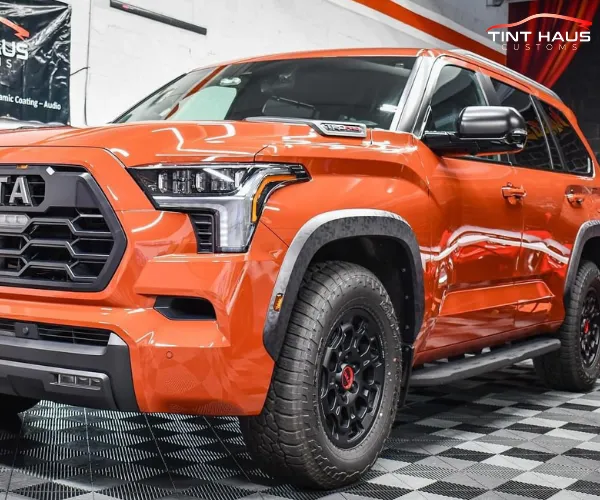
Surface Smoothness and Hydrophobic Performance
A freshly waxed hood feels slick for roughly two weeks. Once detergents and heat strip the wax, the clear coat becomes grabby, allowing water, dirt, and road grime to cling to the panels.
Ceramic coatings maintain an ultra-slick feel for years because their dense silica network has low surface energy. Contaminants struggle to form a mechanical bond with the paint, creating a strong hydrophobic effect (water contact angles often exceeding 110 degrees) that forces water to bead into tight spheres and sheet off rapidly at driving speeds.
| Performance Factor | Traditional Carnauba / Synthetic Wax | Professional Ceramic Coating |
| Bonding Mechanism | Temporary physical layer sitting on clear coat | Permanent/semi-permanent covalent chemical bond |
| Gloss & Visual Profile | Warm, soft shine that fades within 3–6 weeks | Deep, glass-like, candy-coated gloss lasting years |
| Paint Clarity | Traps dust; prone to haze and UV oxidation | Optically transparent; blocks UV rays and prevents fading |
| Surface Smoothness | Slick initially, becomes grabby after a few washes | Sustained ultra-slick feel with extreme water beading |
| Heat & Chemical Resistance | Melts around 180°F; stripped by strong soaps | Withstands extreme heat, road salt, and acidic fallout |
| Maintenance Effort | Requires reapplication every 4–8 weeks | Simple pH-neutral washes; zero waxing ever needed |
For drivers commuting through heavy coastal humidity or visiting our shop from Doral, this slickness cuts wash times in half. Road film, brake dust, and salt spray rinse away cleanly with a gentle wash, reducing hand-wash friction and preventing wash-induced swirl marks. When vehicle owners book a ceramic coating in North Miami Beach to replace constant weekend waxing, that effortless water-sheeting slickness is usually the first difference they notice after a rainstorm.
What Sets a Professional Installation Apart
Consumer spray coatings cannot match a professional multi-year coating because lasting gloss and clarity depend on surface preparation and controlled curing; applying ceramic over unprepped paint simply seals in swirls and oxidation.
At Tint Haus Customs, we treat every vehicle like our own. Our certified vehicle protection specialists perform iron decontamination, clay bar treatment, and machine paint correction before coating. This professional installation ensures uniform chemical bonding with zero high spots or streaking.
We also offer a variety of protective services, including XPEL paint protection film (PPF) and precision window tinting. Whether you need ceramic coating in North Miami Beach, FL, to shield a daily driver from sun and salt air, or a combined PPF and ceramic package to stop rock chips, we recommend only what fits your goals.
South Florida drivers rely on our quality services because we pair warranty-backed products with competitive prices and honest estimates. From inspection to final curing, our team delivers friendly service and quality results without high-pressure upsells, backing our exceptional services with real accountability.
People Also Ask
How long does ceramic coating last compared to car wax?
Traditional carnauba or synthetic wax lasts 3 to 8 weeks before heat, rain, and car washes strip it away. A professionally installed ceramic coating lasts 2 to 7+ years, often backed by manufacturer warranties, depending on the coating package and routine wash care.
Does ceramic coating prevent rock chips and deep scratches?
No, ceramic coating does not stop high-impact rock chips or deep scratches. While its hard SiO2 shell resists light wash-induced swirl marks, chemical etching, and UV oxidation, physical impact resistance requires Paint Protection Film (PPF). Many owners install PPF on high-impact panels (front bumper, hood, fenders) and coat the rest of the vehicle in ceramic for uniform gloss and easy cleaning.
Do I still need to wash my car after getting a ceramic coating?
Yes, regular washing is still necessary, though it takes far less time and effort. Because a ceramic coating creates an ultra-slick, hydrophobic surface, dirt and grime cannot bond tightly to the paint and rinse off easily during routine pH-neutral hand washes with zero waxing required.
Can you put wax on top of a ceramic coating?
No, you should not apply wax over a ceramic coating. Wax has lower surface energy and weaker hydrophobic properties than ceramic, so layering wax on top masks water beading, attracts dust, and dulls the crisp optical clarity of the cured coating.
Is ceramic coating worth it for a brand-new car?
Yes, coating a brand-new vehicle preserves the factory clear coat when it is at its thickest and healthiest. Sealing the paint early blocks UV fading, bird-dropping etches, and swirl marks before they start, protecting both showroom gloss and resale value.
Ready to Give Your Vehicle Unmatched Gloss and Protection?
If you’re ready to stop reapplying wax every few weeks and lock in deep, long-lasting gloss, the enthusiast team at Tint Haus Customs is here to help. Whether you’re exploring long-term paint protection for the first time or want a custom package combining ceramic coating, PPF, and window tint, we’ll walk you through your options honestly.
Contact us today to explore our protection packages, request a personalized quote, or schedule a consultation with our certified specialists.
