
A vinyl wrap can be worth it on a leased vehicle when you want to change its appearance temporarily while keeping the factory paint underneath intact. However, the decision depends on the lease agreement, wrap quality, installation method, removal requirements, and whether the cost makes sense for the remaining lease term.
Is Vinyl Wrap A Good Option For A Leased Car?
Yes, but it requires more planning than wrapping a vehicle you own outright.
One of the main advantages of vinyl is that it can change a vehicle’s color or finish without permanently repainting the exterior. When professionally installed and properly removed, the wrap can allow a lessee to enjoy a different appearance while retaining the underlying factory finish.
Tint Haus Customs describes its vinyl wrap services as a way to transform a vehicle’s appearance while also helping protect the original paint from marks, chips, and UV exposure. Its offerings include vehicle wraps, graphics, lettering, custom pin-striping, and other design options.
For drivers considering vinyl wrap in Miami, the first step should be reviewing the lease agreement before modifying the vehicle.
What Should You Check Before Wrapping A Leased Vehicle?
A lease is a contractual arrangement, so cosmetic modifications should not be treated as automatically acceptable simply because they are removable.
Before scheduling an installation, review:
- Modification restrictions
- Return-condition requirements
- Excess wear provisions
- Paint-condition requirements
- Removal expectations
- Any required inspection procedures
If the agreement does not clearly address vinyl wraps, asking the leasing company for written clarification is the safest approach.
A wrap may be removable, but that does not mean every lease automatically permits it.
What Are the Benefits of Wrapping a Leased Vehicle?
A professionally installed wrap can offer several benefits for leased vehicles:
1. Temporary Appearance Change
Vinyl can change the vehicle’s color, finish, or design without permanently altering the paint.
2. Added Surface Protection
Vinyl provides a sacrificial layer that can help protect paint from minor marks and UV exposure. However, it is not a substitute for PPF, which is designed for stronger impact protection.
3. Reversible Styling
Wraps can typically be removed at the end of the lease, provided the original paint and installation are in good condition.
4. Design Flexibility
Wraps can include custom colors, graphics, lettering, pin-striping, and window graphics for a personalized appearance.
How Does The Lease Term Affect Whether A Wrap Is Worth It?
The remaining lease term is one of the most important financial considerations.
A wrap may make more sense when you have enough time to enjoy the change in appearance and spread the installation cost over a longer period.
If the lease ends soon, the economics become less attractive because you may pay for installation and then shortly afterward pay for removal.
Simple Decision Framework
| Situation | Is A Wrap More Likely To Make Sense? |
| Several years remain | Potentially |
| Lease ends soon | Less likely |
| You strongly dislike the factory color | Potentially |
| Lease prohibits exterior modifications | No |
| Vehicle has damaged paint | Requires inspection first |
| You want temporary styling | Potentially |
| You need maximum impact protection | Consider PPF instead |
The best decision is based on how long you will keep the vehicle, why you want the wrap, and what the lease requires when the vehicle is returned.
Does A Wrap Make Lease Return Easier?
Not necessarily.
A wrap can protect the underlying paint, but the vehicle still needs to meet the leasing company’s return requirements.
The wrap itself may also need to be removed before inspection or return if the leasing company requires the vehicle to be returned in its original configuration.
Removal should be handled carefully. Improper removal techniques can damage paint, especially when the underlying finish is already compromised.
For someone in Brickell, planning the removal well before the lease-return date gives more time to inspect the paint and address any issues that arise after the film comes off.
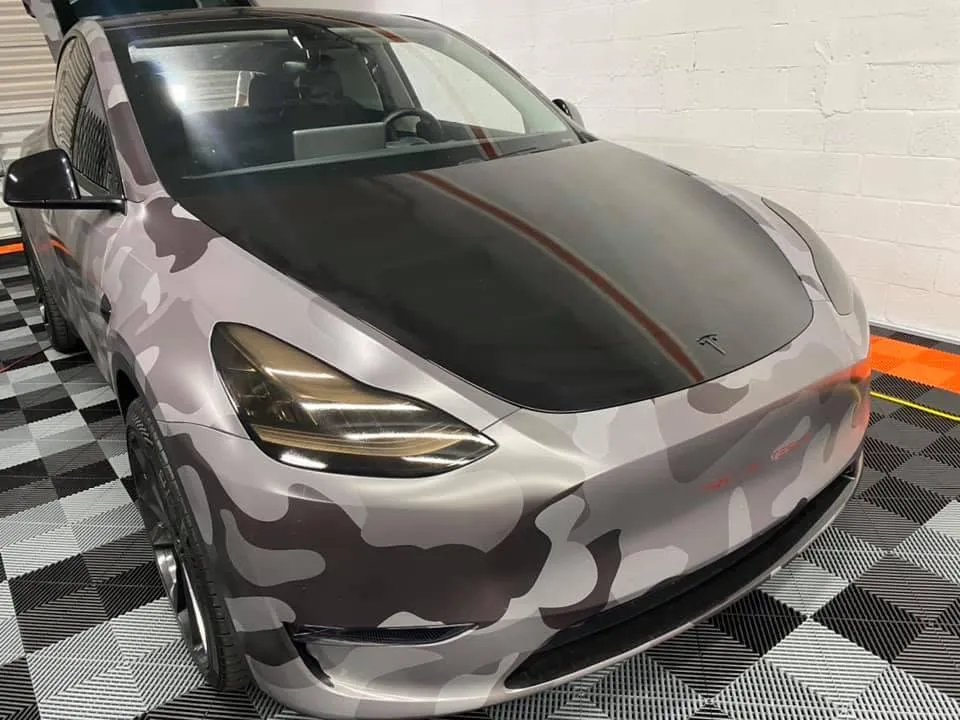
Is Vinyl Wrap Better Than Repainting A Leased Vehicle?
For most leased vehicles, a vinyl wrap is generally more appropriate than repainting when the objective is a temporary change in appearance.
A repaint permanently changes the vehicle’s finish and can create additional concerns when the vehicle is returned.
A wrap, by contrast, is designed as an exterior film that can be removed.
Vinyl Wrap vs. Repaint
Vinyl Wrap
- Temporary appearance change
- Wide range of colors and finishes
- Potentially removable
- Can provide additional surface protection
- Does not permanently alter the paint color
Repaint
- Permanent modification
- More difficult to reverse
- Can affect the vehicle’s original finish
- May create additional lease-return considerations
Neither option should be selected without considering the lease agreement.
How Much Does A Leased Vehicle Wrap Cost?
There is no single price because the total cost depends on the vehicle’s size, surface complexity, vinyl material, design, and installation requirements.
Tint Haus Customs’ blog identifies vehicle size, vinyl type, and surface complexity as major factors influencing the total cost of vehicle wrapping.
Additional factors can include:
- Full versus partial coverage
- Specialty finishes
- Custom graphics
- Existing paint condition
- Surface preparation
- Removal requirements
- Installation complexity
When evaluating whether a wrap is worthwhile, consider both installation and eventual removal rather than focusing solely on the initial quote.
What Is The Best Way To Prepare A Leased Vehicle For Wrapping?
Proper preparation is essential for adhesion and long-term performance.
Tint Haus Customs explains that its preparation process addresses environmental contaminants such as tar, iron deposits, bugs, tree sap, wax, oils, and other residues. It also identifies damaged clear coat, rust, oxidation, deep scratches, and dents as conditions that may require correction before installation.
Basic Preparation Process
- Thoroughly wash the vehicle.
- Remove bonded contaminants.
- Inspect the paint and clear coat.
- Address unsuitable surface defects.
- Remove waxes, oils, and residues.
- Prepare the surface for proper adhesion.
- Install the vinyl under controlled conditions.
This preparation is especially important on a leased vehicle because the objective is not simply to make the wrap look good. The underlying paint also needs to remain in suitable condition for eventual removal.
A Common Myth About Wrapping Leased Vehicles
Myth: A Removable Wrap Automatically Makes A Lease Modification Safe
Removability does not guarantee that a modification complies with a lease agreement.
A vinyl wrap in Miami, FL can be physically removable while still requiring consideration of the leasing company’s rules. Installation and removal can also affect the underlying finish if the vehicle has compromised paint or if the work is performed improperly.
The correct approach is to confirm the lease requirements first, then select an experienced installer.
How Should You Maintain A Wrapped Leased Vehicle?
Proper maintenance helps preserve the wrap’s appearance and condition throughout the lease.
Recommended practices include:
- Wash the vehicle regularly.
- Use products appropriate for automotive vinyl.
- Avoid abrasive brushes.
- Remove bird droppings and tree sap promptly.
- Avoid unnecessary aggressive scrubbing.
- Inspect edges for lifting.
- Follow the vinyl manufacturer’s care recommendations.
Maintenance is particularly important because accumulated contamination can affect the film’s appearance and make later removal more difficult.
Is A Vinyl Wrap Worth It On A Lease?
A vinyl wrap can be worthwhile if you have enough time remaining on the lease, the agreement permits the modification, and you value temporary customization or additional surface protection.
The strongest case is generally for a lessee who wants a significant change in appearance but does not want to permanently repaint the vehicle.
Tint Haus Customs provides professional vinyl wrap installation and describes its wrap services as covering vehicles, trucks, and watercraft with automotive-grade materials and custom design options.
For drivers comparing Miami FL vinyl wrap options, evaluate the material, preparation process, installation quality, lease requirements, and eventual removal plan rather than choosing solely on the initial price.
Final Takeaway
Vinyl wrap can be a smart choice for a leased vehicle when the lease permits the modification, and the remaining term gives you enough time to benefit from the investment. It offers temporary styling, can help protect the original finish from some everyday exposure, and can be removed when the lease ends.
However, the wrap does not automatically satisfy lease-return requirements. Always confirm the contract terms, inspect the original paint, use professional installation, and plan for removal before the return inspection.
If you are considering a Miami vinyl wrap, Tint Haus Customs offers professional vinyl wrap and graphics installation, serving Miami as part of its South Florida service area.
Contact Us to discuss your vehicle, desired wrap design, lease timeline, and installation requirements.
People Also Ask
Can You Wrap A Leased Car?
Potentially, but you should first confirm that the lease agreement permits exterior modifications and determine whether the vehicle must be returned to its original appearance.
Does Vinyl Wrap Damage A Leased Car?
A properly installed wrap does not inherently damage a vehicle, but compromised paint, poor installation, or improper removal can create problems.
Should I Remove A Vinyl Wrap Before Returning A Leased Car?
Check the lease agreement or ask the leasing company. If the vehicle must be returned in its original configuration, professional removal may be necessary.
Is Vinyl Wrap Better Than PPF For A Leased Vehicle?
It depends on the objective. Vinyl is primarily useful for changing appearance, while PPF is designed primarily for physical paint protection from road debris and impacts.